Fitness over FLOPS: 4× DGX Spark vs H200 vs B300
Capacity shape, bandwidth, and whether you can get a seat beat a raw TFLOPS ranking.
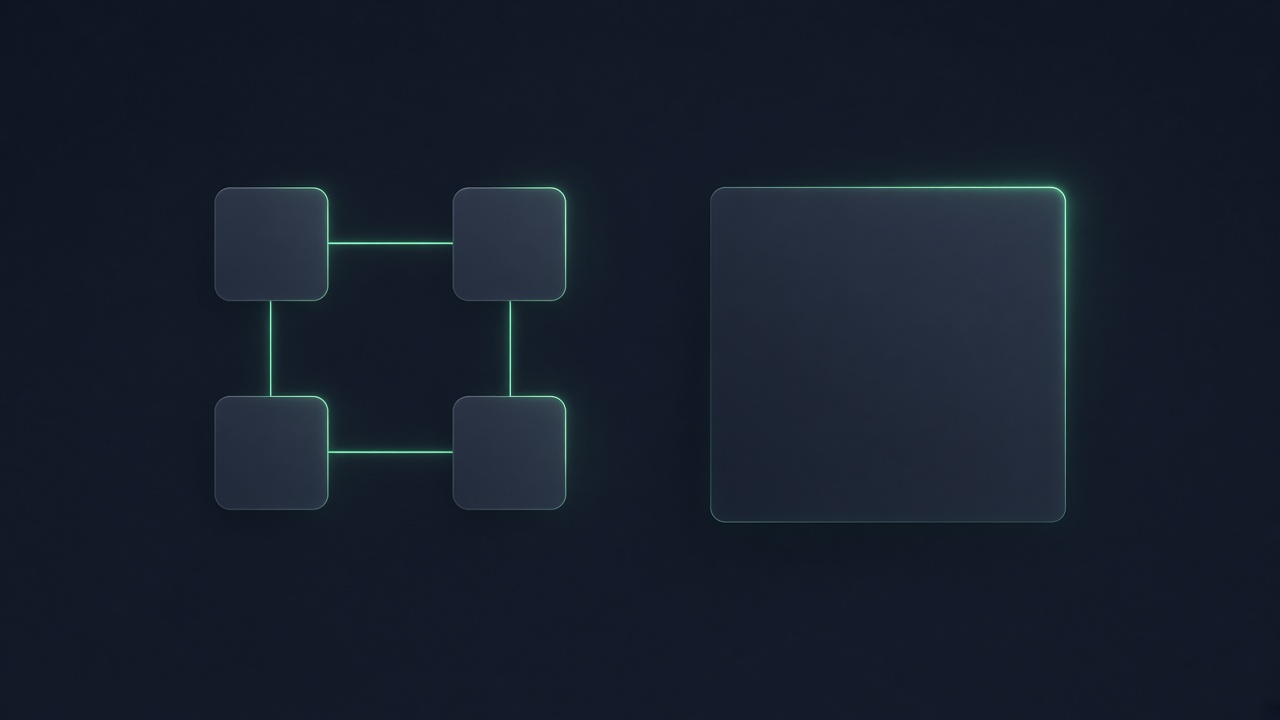
People put a four-Spark stack next to an H200 or a B300 and ask the same first question: which is faster?
Wrong first question.
Faster at what? For whom? And — the one that bites in 2026 — can you get the box this week?
This is a fitness guide. Capacity shape. Bandwidth class. Availability. Affordability. FLOPS sit in a secondary column on purpose. Specs from NVIDIA; Spark ring rates from Enverge; queue signals from named cloud pages. We are not publishing a cross-SKU tok/s race in this post — if you want the exact numbers we are collecting, email us (below).
We already cover one Spark vs H100/H200 on the single-box axes in DGX Spark vs H100 vs H200. This piece is the other graduation: when the honest answer is a four-node ring — and when you should leave the Spark family entirely.
What you are actually comparing
Four desk-class DGX Spark GB10 nodes versus one datacenter GPU.
Asymmetric on purpose. That is the graduation question.
| Machine | Memory | Memory bandwidth | Interconnect | $/hr orientation (as of Oct 2026) |
|---|---|---|---|---|
4× DGX Spark (Enverge spark-4) |
512 GB aggregate (4× ~128 GB) | 273 GB/s per node (hardware overview) | ConnectX-7; Cluster Assistant: 4 nodes need a switch | $4.50 (Enverge pricing) |
| 1× H200 | 141 GB HBM3e | 4.8 TB/s | NVLink ~900 GB/s (SXM) | CoreWeave HGX H200 8-GPU node $50.44/hr on-demand (~$6.31/GPU-hr); other clouds list ~$3–7+ when in stock |
| 1× B300 (Blackwell Ultra GPU) | 288 GB HBM3e | 8 TB/s (Blackwell Ultra) | NVLink 5 ~1.8 TB/s | Aggregator listings often ~$7–9+/GPU-hr; many hours show out of stock |
Three traps show up the first afternoon you book the wrong thing:
- 512 GB on Spark is four pools, not one VRAM slab. You only reach aggregate by sharding — tensor parallel, pipeline parallel, multi-node vLLM, and friends. On a multi-node booking,
nvidia-smion node0 still shows one GB10. Same day-two surprise as on Enverge 2×. The other three GPUs are on satellites;/etc/enverge/cluster.mdhas the rail story. - B300 GPU ≠ DGX B300. The DGX system is eight Blackwell Ultra GPUs (~2.1 TB total GPU memory, about 14 kW). Here “B300” means the single GPU SKU unless we say otherwise.
- Picking 1× / 2× / 4× inside the Spark family is size math. Start with What Fits in 128GB?; the ladder draft models on 1 / 2 / 4 DGX Sparks covers when to step within the family. This post is the jump out.
Fitness axes
| Axis | Question | 4× Spark | H200 | B300 |
|---|---|---|---|---|
| Capacity shape | How is memory arranged? | Four sharded ~128 GB pools | One contiguous 141 GB | One contiguous 288 GB |
| Bandwidth class | Is the job memory-pipe bound? | LPDDR5x + fabric tax between nodes | HBM3e | HBM3e (higher still) |
| Availability | Seat this week? | Rent / queue at app.enverge.ai | Often reserved or intermittent | Scarcer still |
| Affordability | Cost of this window? | $4.50/hr stack | Higher $/GPU-hr + scarcity | Highest scarcity premium |
Speed — prefill, multi-user serve, train step time — is a fifth check. Run it only after the first failing row above.
Fit the shape first. Roughly 200–400 GB of weights plus headroom may clear a sharded Spark-4 and miss a single H200. Or it may fit a contiguous B300 while a Spark ring pays a cross-node TP tax for the same weights. Same parameter count. Different geometry.
Bandwidth is a class, not a rounding error. Local Spark memory is 273 GB/s. H200 is 4.8 TB/s. B300 is 8 TB/s. Community measurements of a single ConnectX-7 cable land near ~25 GB/s between Sparks — useful for capacity, useless as a stand-in for HBM. Treat that cable figure as a secondary citation until we publish our own.
Seat and dollars after fit. Price sizes the calendar window once the memory shape works and you can actually start. $4.50/hr for four Sparks is not “cheaper than H200” as a slogan. It is a dated stack rate next to CoreWeave’s published 8× H200 node at $50.44/hr — different products, different access paths.
What we already know from the Spark family
Context only. On 1×, a quantized Qwen3.5-122B path runs usefully on one GB10. On 2×, Qwen2.5-72B bf16 at TP=2 hit about 85.4 tok/s aggregate (2026-07-02 floor). That proves ConnectX-7 can carry a capacity job. It does not prove four Sparks beat an H200 on single-stream decode.
When each option wins
| Prefer… | When the job looks like… |
|---|---|
| 4× Spark ring | You need >141–288 GB aggregate with a stack that can shard; you want DGX OS / CUDA desk continuity; you need a seat soon for prototype, private agent, or fit experiments; multi-user SLA is not the point. |
| H200 | You need contiguous Hopper HBM + high bandwidth on one GPU; serving or training that saturates the memory pipe; Spark’s 273 GB/s (or the fabric tax) is already the bottleneck you feel. |
| B300 | You need ~288 GB contiguous plus Blackwell Ultra bandwidth/compute; you are moving onto the newest factory SKU; you accept scarcer on-demand / reserved paths. |
Three short walks
A. Decode pain on a model that already fits.
Checkpoint loads on one Spark. Prefill is fine. Interactive decode crawls in low single-digit tok/s on a dense mid-size model. Adding three more Sparks does not widen the hose inside one node. Graduate toward H200/B300 if the clock is the product; stay if fit and cost matter more than wait.
B. Weights that refuse one GPU.
~300B-class weights at a fat precision, or a KV plan past 141–288 GB on one card. Spark-4 is in scope if ranks land on four nodes. Book it, read /etc/enverge/cluster.md, prove NCCL with a tiny torchrun before pulling a giant checkpoint. Single-process scripts burn $4.50/hr on one busy GB10 and three cold satellites — fix the launcher, or stay smaller. A multi-GPU H200/B300 node (e.g. CoreWeave’s 8× H200 SKU) is a different purchase.
C. The seat is the product.
The B300 page has a $/hr. The stock board says out of stock. Run the shardable job on spark-4 this week; revisit B300 when a real seat appears. Still picking 1× vs 2× vs 4× Spark? 128 GB guide first.
Availability is part of fitness
Here is the catch most FLOPS tables omit.
On-demand GPU access in late 2026 is often a place in a queue, not a promise you boot tonight. TechnologyMatch on CoreWeave / Lambda / Nebius: quota and inventory are separate; large US fleets have reported sold-out 2026 allocations. The Compute College GPU Capacity Board (~22 Oct 2026) still paints H200 as “Some” / constrained. B300 aggregator boards flip to out of stock even when a $/hr sits on a marketing page.
Enverge Spark queues too. Wait is free; billing starts when the instance is created. Different path than hyperscaler H200 — not instant spark-4.
Climax, once: a parked Ferrari with no key loses to the bus that stops at your lab this afternoon.
Before you book — a five-minute fitness check
Skeleton gate map, as a checklist you can run before you open the picker:
- Shape. Do the weights + KV at your precision fit one contiguous HBM slab (141 GB / 288 GB), or do they need more than one ~128 GB pool?
- Launcher. If you need more than one pool, can your stack place ranks today (
torchrun, multi-node vLLM, Ray…)? No → stay on 1× or finish single-node bring-up first. - Pipe. Is the pain “won’t fit,” or “fits and I wait on decode / step time”? Fit → Spark family or shard. Wait on a model that already fits → graduate toward H200/B300 bandwidth.
- Seat. Open the live stock / queue page for the SKU you want. If H200/B300 is a maybe, treat Enverge
spark-4as the path that can start this week. - Window. Compare $4.50/hr for the ring to the dated H200/B300 page only after 1–4 clear. Price is the last column, not the first.
Curious about the exact benchmark results we are collecting on the ring vs H200/B300 — tok/s floors, NCCL allreduce, capacity-fit loads? Email team@enverge.ai and ask. We would rather send you the numbers than pad this post with unpublished races.
Close
Stay on 4× Spark when aggregate capacity and the access path win.
Graduate to H200 or B300 when contiguous HBM bandwidth and multi-user / heavy-train throughput are the real constraints. Enverge does not sell those SKUs. Rent them where you can get a seat — and say so without apology.
Ready to try the ring? Launch or queue spark-4 at app.enverge.ai ($4.50/hr). Fitness first. Speed second.
FAQ
Is 512 GB one big GPU?
No. Four ~128 GB pools over ConnectX-7. Shard to use more than one.
Is Spark cheaper than H200?
Sometimes for a stack you can get this week. Fit and seat first; then compare $4.50/hr to the live H200 page (CoreWeave’s 8× H200 at $50.44/hr is one dated anchor).
Where are the head-to-head numbers?
Not in this post yet. Email team@enverge.ai if you want the exact benchmark results.
Only need one Spark?
Start with What Fits in 128GB? and Spark vs H100/H200.